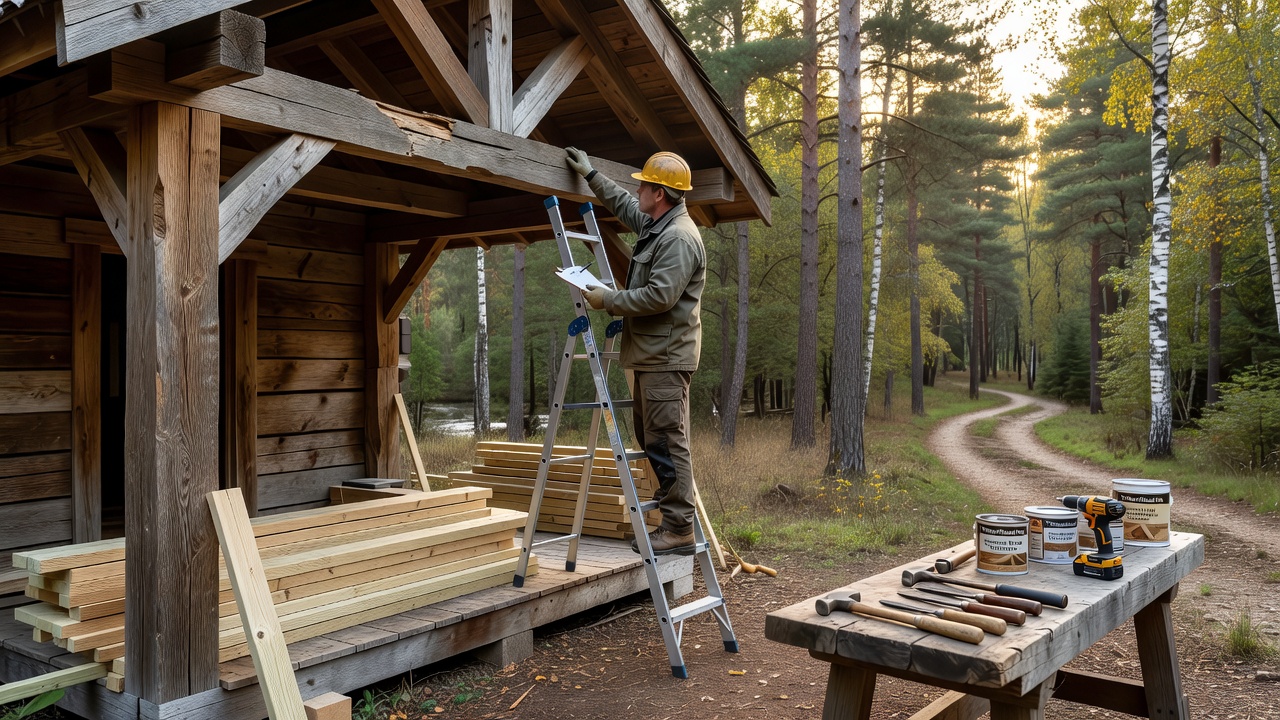
Noah Becker · 16 November 2026
Seasonal Maintenance Routines for Preserving Timber Frameworks in Remote Woodland Properties
Timber frameworks in remote woodland properties face constant exposure to moisture cycles, temperature swings, and biological agents that accelerate decay when left unchecked, and seasonal maintenance routines address these factors through targeted inspections and treatments that extend structural longevity. Property owners in forested regions track these patterns because data from regional forestry agencies shows untreated wood loses up to 15 percent of its load-bearing capacity within five years under typical woodland humidity levels.
Core Principles of Timber Preservation
Researchers at institutions such as Natural Resources Canada have documented that effective preservation begins with understanding wood species responses to local microclimates, where coniferous timbers common in northern woodlands absorb and release moisture at different rates than hardwoods. Observers note that regular surface checks combined with proper ventilation prevent the moisture buildup that invites fungal growth and insect infestation, while coatings applied at correct intervals form barriers against ultraviolet degradation and precipitation.
Spring Assessment and Cleaning
After winter snowmelt, experts recommend a systematic inspection of all exposed joints and load-bearing members for cracks or displacement caused by freeze-thaw cycles, since early detection allows repairs before loads increase in warmer months. Cleaning routines involve removing accumulated debris from beam surfaces and gutters using soft brushes and low-pressure water, which avoids forcing moisture deeper into the grain, and any identified surface staining receives treatment with approved borate solutions that deter wood-boring insects without introducing harsh chemicals into surrounding soil.
Summer Monitoring and Surface Protection
During peak growing season, increased sunlight and humidity accelerate checking in timber surfaces, so monthly visual scans from ground level and accessible vantage points help track new splits that could allow water entry. Reapplication of penetrating oils or stains occurs when existing finishes show graying or flaking, and ventilation openings around the framework receive clearing to maintain airflow that reduces condensation risks inside enclosed sections. Studies from the USDA Forest Service indicate that consistent summer upkeep reduces the incidence of advanced decay by measurable margins in monitored structures.
Autumn Preparations and Reinforcement
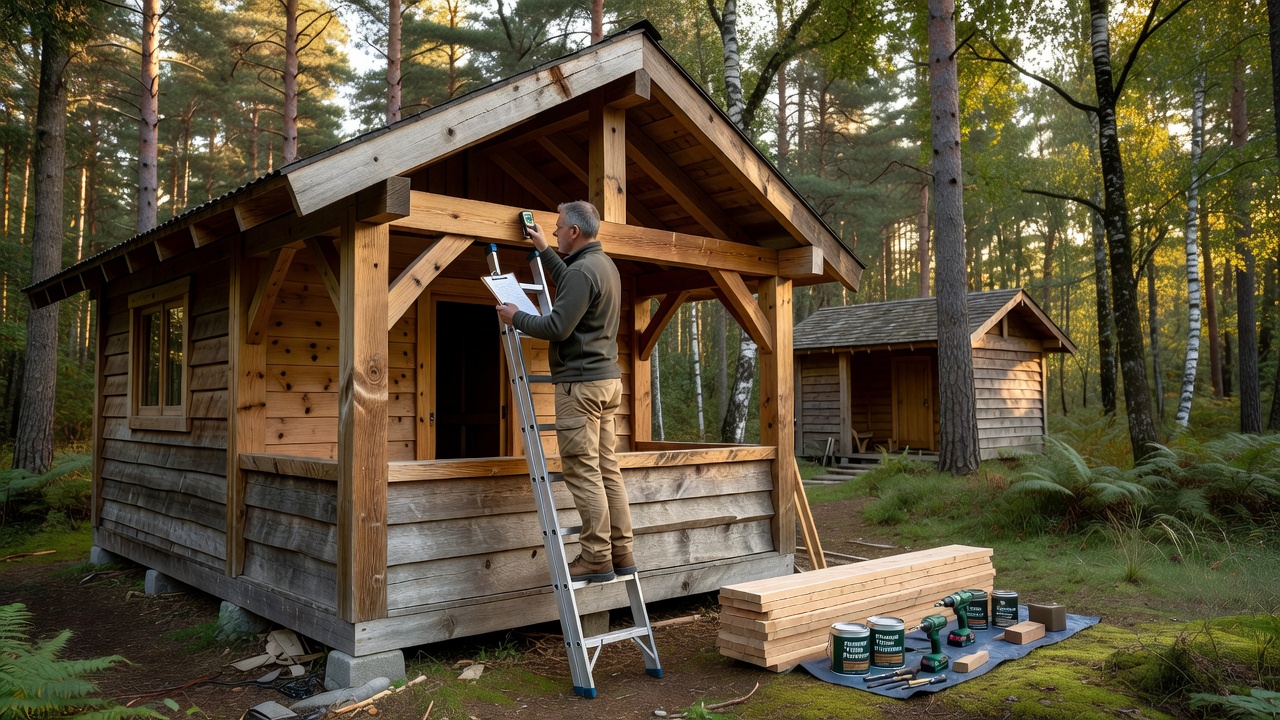
As temperatures drop in late fall, attention shifts to sealing end grains and reinforcing connections that may experience expansion from upcoming freezes, with property managers often applying additional protective layers before sustained cold sets in. Drainage channels around foundations are verified to direct water away from timber bases, preventing saturation that leads to rot at ground level, and any loose fasteners are tightened to maintain structural integrity through wind events common in wooded areas. In November 2026, updated regional reports highlighted increased emphasis on these pre-winter steps following several seasons of heavier precipitation patterns across northern forests.
Winter Oversight and Emergency Readiness
Although outdoor work decreases, remote property caretakers schedule periodic checks when access permits, focusing on snow accumulation that adds weight to roofs and eaves connected to timber frames. De-icing methods avoid direct chemical application on wood elements, favoring mechanical removal instead, and emergency kits stocked with temporary bracing materials allow quick response to storm damage until full repairs become feasible in spring. Data compiled by forestry research groups shows that proactive winter monitoring correlates with fewer major interventions required the following year.
Documentation and Long-Term Tracking
Maintenance logs that record inspection dates, observed conditions, and applied treatments provide continuity for successive owners or caretakers of isolated sites, enabling pattern recognition over multiple seasons. Digital records supplemented by dated photographs allow comparison against baseline images, revealing gradual changes that might otherwise go unnoticed during single visits, and this systematic approach supports compliance with any applicable local building or heritage guidelines for historic timber structures.
Conclusion
Consistent application of seasonal routines preserves the functional and aesthetic value of timber frameworks in remote woodland settings by addressing environmental stresses at their peak occurrence points throughout the year. Integration of inspection schedules, appropriate material treatments, and record-keeping creates a repeatable process that adapts to varying site conditions while relying on established preservation practices verified through ongoing research and field observations.