Zoe Sullivan · 21 September 2026
Rethinking Material Sourcing Strategies for Long-Term Durability in Remote Waterfront Structures
Remote waterfront structures face constant exposure to water, weather cycles, and limited access for repairs, which drives ongoing shifts in how materials get sourced and evaluated for extended service life. Data from coastal engineering projects show that traditional supply chains often fail to account for the combined effects of salinity, freeze-thaw cycles, and transportation delays that shorten component lifespan in these locations.
Current Challenges in Material Procurement
Observers note that supply routes to isolated waterfront sites frequently rely on seasonal barge or air transport, and this creates bottlenecks when standard lumber or steel grades arrive already compromised by moisture during transit. Research indicates that corrosion rates in marine environments accelerate by factors of three to five compared with inland conditions, according to measurements compiled by Natural Resources Canada over multi-year monitoring programs.
Procurement teams must also navigate fluctuating availability of certified suppliers, since many remote regions lack local mills or foundries capable of producing materials that meet updated durability specifications. Figures from project logs reveal that delays of eight to twelve weeks remain common when sourcing specialized coatings or fasteners rated for prolonged submersion.
Advances in Sourcing Approaches
Engineers have begun integrating regional material databases with real-time environmental modeling to match wood species, concrete mixes, and polymer composites against site-specific exposure data. One study released by the Australian Department of Climate Change, Energy, the Environment and Water documented how locally harvested timber treated with copper-based preservatives extended service intervals by 40 percent in similar tidal zones.
Digital tracking systems now allow project managers to verify chain-of-custody records for each component before it leaves the supplier yard, reducing the risk of substituting lower-grade stock during last-minute substitutions. These platforms also flag upcoming regulatory changes, such as the updated European Union Construction Products Regulation expected to influence import standards for waterfront hardware by late 2025.
Case Examples from Recent Projects
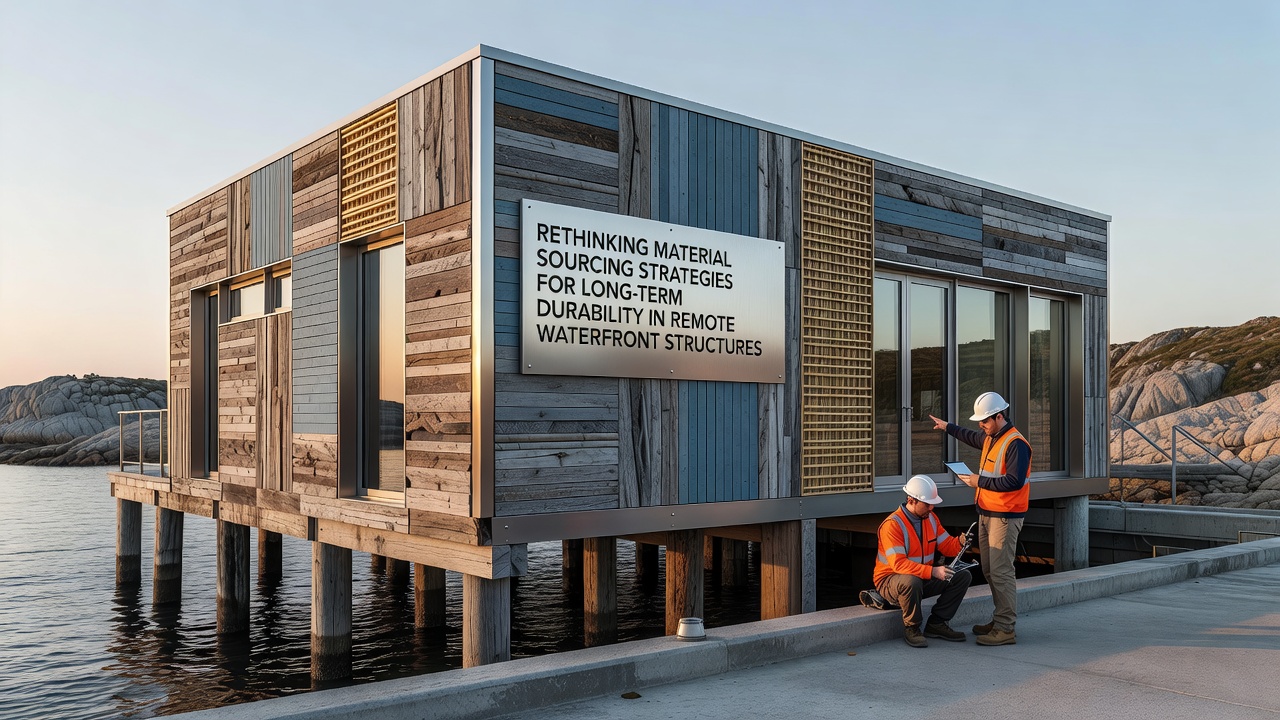
Teams working on northern lake installations have shifted toward hybrid framing that pairs pressure-treated glulam beams with stainless-steel connectors sourced from certified North American mills. Performance records collected after three winters show reduced checking and joint loosening compared with previous all-wood assemblies that required annual inspections.
Another initiative in coastal British Columbia incorporated recycled high-density polyethylene decking produced from regional waste streams, cutting both transport emissions and replacement frequency. Monitoring data gathered through embedded sensors confirmed that surface temperatures stayed within acceptable ranges, limiting thermal expansion stress during summer peaks.
Emerging Standards and September 2026 Outlook
Industry groups continue to refine testing protocols that simulate decades of waterfront exposure within accelerated laboratory cycles, and results feed directly into updated sourcing guidelines. A comprehensive review scheduled for publication in September 2026 by the International Maritime Organization will compile comparative performance metrics across multiple climate zones, giving planners additional benchmarks for material selection.
Contractors who adopt these evolving specifications report fewer emergency mobilizations because components arrive pre-certified for the expected service environment. The approach also supports more accurate life-cycle cost modeling that factors in both initial procurement and future maintenance intervals.
Conclusion
Updated sourcing frameworks that combine localized testing, verified supply chains, and forward-looking regulatory awareness continue to reshape how remote waterfront structures achieve extended durability. Project records demonstrate measurable gains in component longevity when material choices align closely with documented environmental demands and transport realities.