Drew Ludwig · 5 October 2026
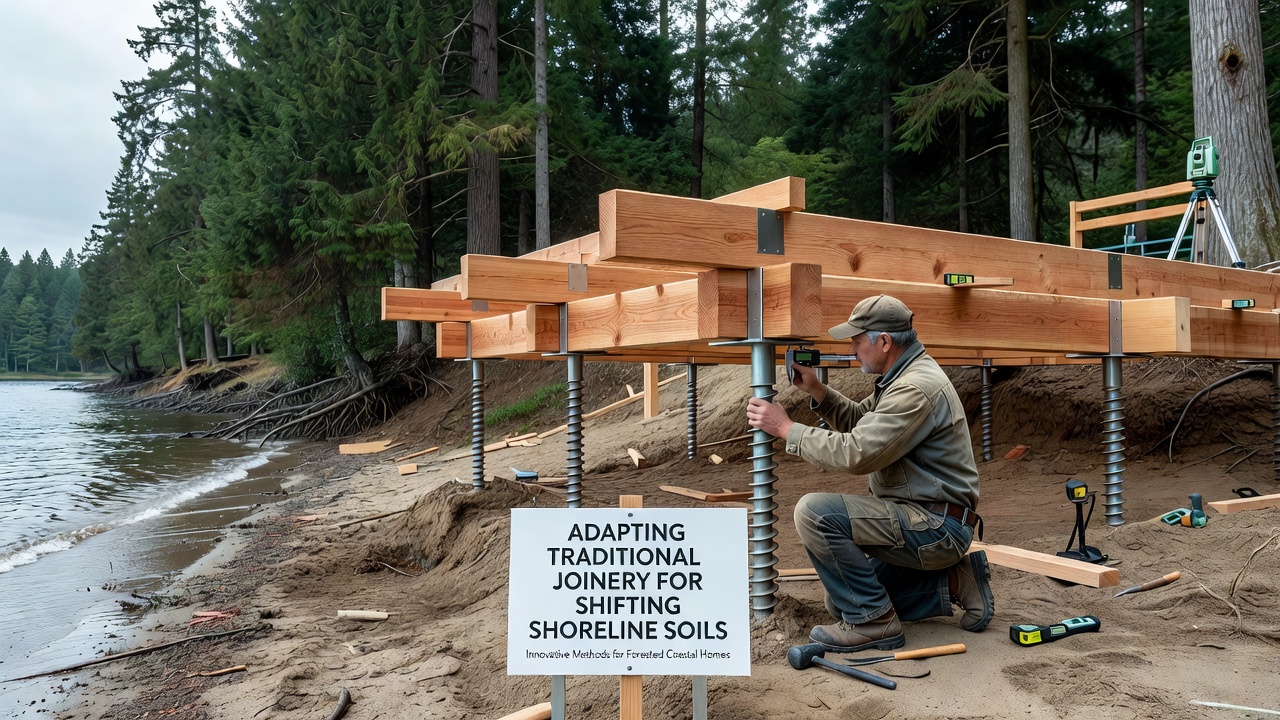
Adapting Traditional Joinery Methods to Withstand Shifting Soil Conditions Around Forested Shoreline Homes
Forested shoreline properties face unique challenges from soil movement driven by seasonal water level changes, tree root expansion, and freeze-thaw cycles that destabilize building foundations over time. Traditional joinery techniques such as mortise-and-tenon connections, dovetail joints, and lap joints have long served residential construction, yet they require specific modifications when installed in dynamic soil environments. Engineers and builders have documented these adaptations through field observations and structural testing across multiple regions.
Soil Dynamics in Forested Shoreline Areas
Shifting soils around lakes and rivers often result from erosion patterns that remove supporting material while root systems from nearby trees exert lateral pressures that vary with growth seasons. Data from monitoring stations show annual displacements ranging from several millimeters to several centimeters depending on precipitation levels and vegetation density. These movements place continuous stress on structural frames, and joinery must accommodate micro-movements without fracturing timber elements or compromising load paths.
Researchers have mapped soil profiles at representative sites and found layered compositions where upper organic material overlays denser mineral strata, creating differential settlement risks. Builders address these conditions by incorporating expansion gaps within joints and selecting timber species with documented flexibility under repeated loading cycles.
Core Traditional Joinery Techniques and Their Baseline Performance
Mortise-and-tenon joints rely on precise fitting to transfer loads through wood fibers, yet they can loosen when surrounding soil settles unevenly. Dovetail configurations provide resistance to pulling forces but may develop gaps under repeated shear from shifting ground. Lap joints offer simplicity in assembly yet require additional reinforcement when installed near water edges where moisture content fluctuates.
Studies conducted by geotechnical teams have measured joint performance under simulated soil movement and recorded failure thresholds when connections lack secondary fastening. These findings prompted the development of hybrid approaches that retain visible traditional aesthetics while adding hidden mechanical elements.
Adaptation Strategies for Enhanced Stability
One established method involves inserting metal plates or dowels at critical joints to allow controlled movement while maintaining alignment. Builders combine these inserts with traditional pegs so that the assembly retains historical appearance yet gains tolerance for soil creep. Another technique uses elongated tenons paired with slotted mortises that permit sliding along one axis, reducing stress concentrations during seasonal shifts.
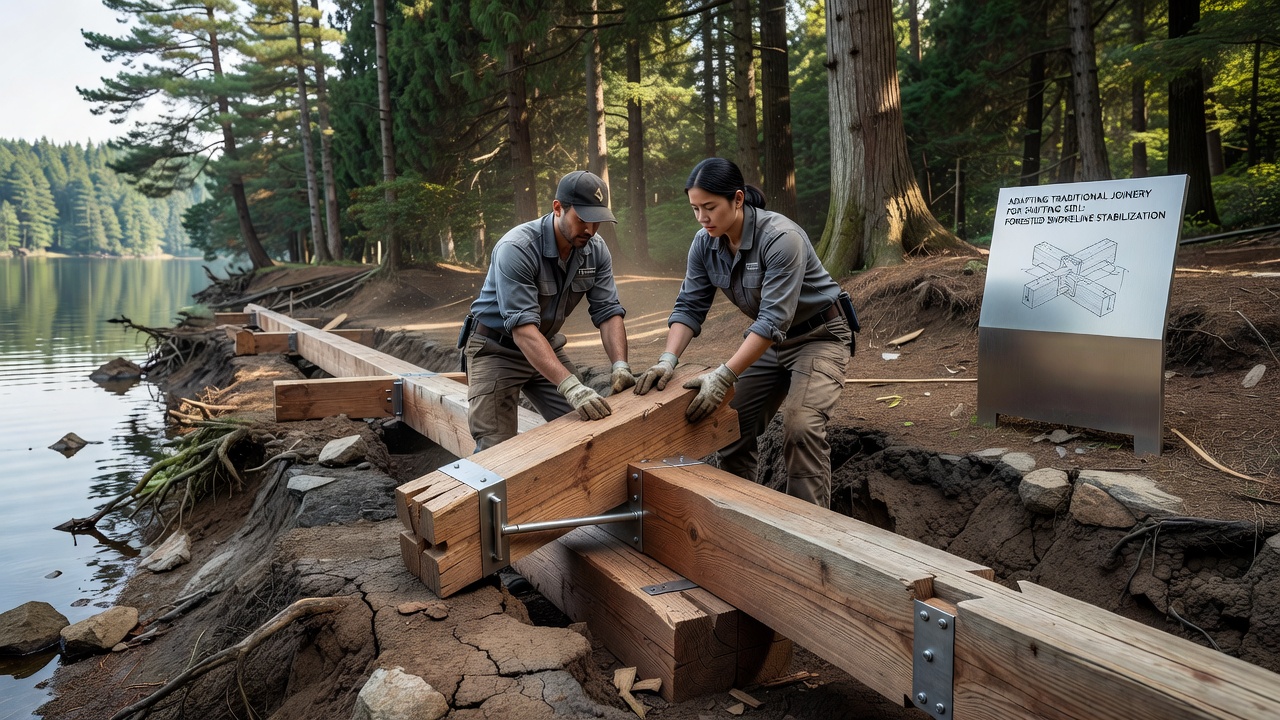
Additional measures include the integration of flexible sealants within joint cavities to exclude moisture while permitting minor flex. In regions with pronounced root activity, crews install root barriers alongside foundation elements and adjust joinery spacing to distribute loads more evenly across the structure. Data collected through long-term instrumentation shows these combined modifications reduce joint displacement by measurable percentages compared with unmodified traditional assemblies.
According to Natural Resources Canada, soil monitoring programs have supplied regional datasets that inform spacing guidelines for reinforced joints in shoreline zones. Builders reference these datasets when determining the number and placement of movement-accommodating connections per linear meter of framing.
Material Selection and Treatment Considerations
Timber choice influences long-term joint integrity in fluctuating moisture environments. Species such as western red cedar and certain oak varieties demonstrate better dimensional stability when exposed to repeated wetting and drying. Preservative treatments applied after joinery fabrication help protect end grain exposed during cutting operations.
Research indicates that kiln-dried stock combined with site-applied coatings maintains tighter fits over multiple seasonal cycles than air-dried material alone. Fastener materials also receive attention; stainless steel or coated alternatives resist corrosion that could otherwise accelerate joint degradation near saline or mineral-rich waters.
Implementation Examples from Field Projects
Projects completed in the Pacific Northwest and parts of the Great Lakes region illustrate practical application of these adaptations. Crews documented installations where traditional post-and-beam frames received modified knee braces with slotted connections, allowing the structure to respond to soil heave without visible distortion. Follow-up inspections conducted after several years confirmed that the adapted joints retained functionality while preserving the intended architectural character.
Another documented case involved retrofitting an existing cabin where original lap joints had begun to separate due to root-induced movement. Replacement joints incorporated both traditional pegging and supplemental metal straps positioned to remain concealed behind trim elements. Monitoring equipment installed at the site recorded reduced rates of further separation following the work.
Figures released in October 2026 by a collaborative research effort involving multiple North American institutions continue to track performance across a broader sample of sites and support refinement of current spacing and reinforcement recommendations.
Conclusion
Adapting traditional joinery for shifting soil conditions combines established craftsmanship with targeted engineering modifications that address specific movement patterns around forested shorelines. Field data and monitoring results demonstrate measurable improvements in structural resilience when joints incorporate controlled flexibility alongside conventional load-transfer features. Builders and property owners gain practical guidance from regional soil datasets and documented project outcomes that support continued use of time-tested joinery methods in these demanding environments.